Understanding Gravity: From Falling Apples to Orbiting Planets

Gravity is a fundamental force of nature that influences the motion of objects ranging from falling apples to orbiting planets. Its study helps explain why objects fall toward the ground and how celestial bodies remain in orbit. This article examines the principles behind gravity, focusing on Newton’s law of universal gravitation and its applications in everyday phenomena and astronomy.
By exploring the relationship between mass, distance, and gravitational force, we can gain insight into both terrestrial and celestial motions. The discussion aims to provide a clear, process-oriented overview without implying specific outcomes or predictions. Understanding gravity is essential for comprehending many aspects of the physical world.
SciSimplified presents this information to clarify the mechanisms of gravity. The content is neutral and informative, suitable for readers seeking a foundational understanding.
Historical Context and Newton’s Contribution
Before Newton, understanding of motion and celestial mechanics was limited. Ancient philosophers and astronomers proposed various theories, often attributing planetary motions to divine or perfect circular paths. However, these explanations lacked a unified framework that could account for both earthly and heavenly phenomena. Newton’s work in the late 17th century marked a significant shift by proposing that the same force governing falling objects also governs the motion of planets. This unification was revolutionary and laid the groundwork for classical mechanics.
Newton’s law of universal gravitation states that every particle of matter attracts every other particle with a force proportional to the product of their masses and inversely proportional to the square of the distance between their centers. This law provided a mathematical basis for understanding gravitational interactions. It explained why planets orbit the Sun in elliptical paths, as described by Kepler’s laws, and why objects fall toward Earth. The law’s simplicity and broad applicability made it a cornerstone of physics.
Newton’s insights were built upon the work of predecessors like Galileo and Kepler, who had described the motion of objects and planets without a unified cause. By synthesizing these observations, Newton formulated a law that could predict a wide range of phenomena. This historical development illustrates how scientific understanding evolves through observation, mathematics, and synthesis.
The Law of Universal Gravitation: Core Principles
At the heart of Newton’s law is the concept that gravitational force is always attractive and acts along the line connecting the centers of two masses. The force is directly proportional to the product of the masses and inversely proportional to the square of the distance between them. This means that if the mass of one object doubles, the gravitational force doubles, assuming distance remains constant. If the distance doubles, the force decreases to one-quarter of its original value. These relationships are fundamental to calculating gravitational effects.
The law applies universally, from subatomic particles to galaxies, though its effects are most noticeable with large masses. For everyday objects, the gravitational force between them is negligible because their masses are small. However, Earth’s large mass exerts a significant force on objects near its surface, causing them to accelerate downward at approximately 9.8 meters per second squared. This acceleration is what we perceive as weight.
Mathematically, the law is expressed as F = G * (m1 * m2) / r^2, where F is the gravitational force, G is the gravitational constant, m1 and m2 are the masses, and r is the distance between their centers. The gravitational constant G is a fundamental constant that quantifies the strength of gravity. Its value has been determined through experiments, though it is relatively small, reflecting the weakness of gravity compared to other fundamental forces.
Understanding these core principles allows for predictions about the motion of objects under gravity. For instance, the trajectory of a projectile can be calculated using these principles, assuming no other forces act. Similarly, the orbits of planets can be derived from the gravitational attraction between them and the Sun. The law’s predictive power is a testament to its validity and utility.
Gravity in Everyday Motion
In daily life, gravity manifests in numerous ways. When an object is dropped, it falls toward the ground due to Earth’s gravitational pull. The rate at which it falls depends on its mass and the gravitational acceleration, though in the absence of air resistance, all objects fall at the same rate regardless of mass. This was famously demonstrated by Galileo and later confirmed by Newton’s laws. The motion of a thrown ball, the path of a roller coaster, and the settling of sediment in a river all involve gravity.
Gravity also influences the motion of fluids, such as water flowing downhill or atmospheric pressure variations. It affects the weight of objects, which is the force exerted by gravity on a mass. Weight can vary slightly depending on location because Earth’s gravitational field is not perfectly uniform; it is slightly weaker at the equator due to the planet’s rotation and shape. These variations are small but measurable and are considered in precise applications like satellite navigation.
In engineering and construction, gravity is a critical factor. Structures must be designed to withstand gravitational loads, and vehicles must overcome gravity to lift off. The study of statics and dynamics heavily relies on gravitational principles. For example, the stability of a building depends on how its weight is distributed and supported against gravity.
Everyday activities like walking, jumping, and lifting objects involve gravitational interactions. Our muscles work against gravity to move our bodies, and sports like basketball or high jump are governed by ballistic trajectories influenced by gravity. Even the simple act of sitting involves gravity pulling us into the chair, with the chair providing an equal and opposite normal force. These examples highlight the pervasive role of gravity in our lives.
Planetary Orbits and Celestial Mechanics
Gravity is the primary force governing the motion of celestial bodies. The planets in our solar system orbit the Sun due to the gravitational attraction between them and the Sun. According to Newton’s law, the Sun’s massive size exerts a strong pull on the planets, keeping them in stable orbits. The shape of these orbits is elliptical, with the Sun at one focus, as described by Kepler’s first law. The speed of a planet varies along its orbit, moving faster when closer to the Sun and slower when farther away, consistent with Kepler’s second law.
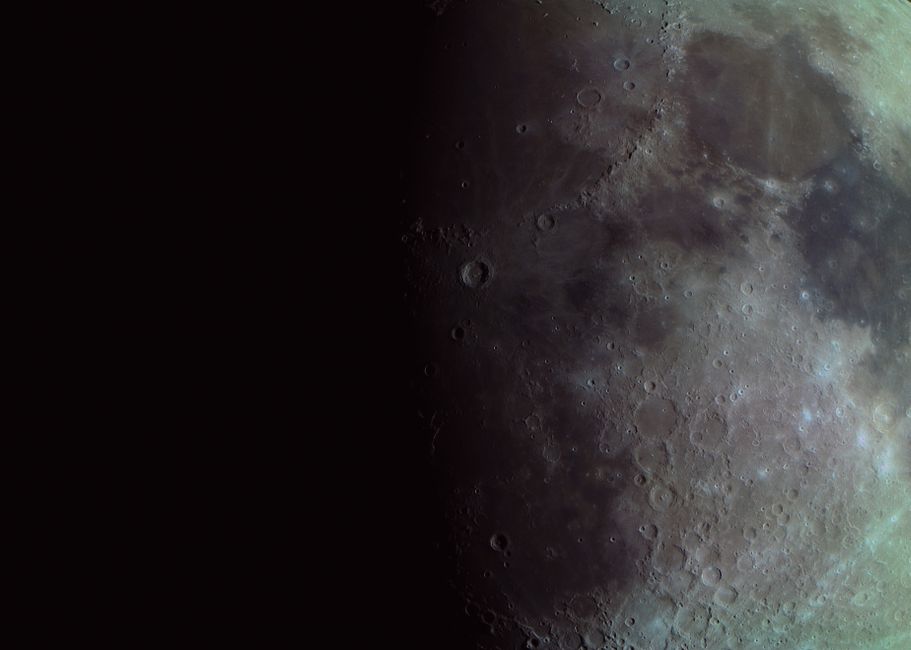
The gravitational interaction between planets and their moons also determines their orbits. For example, the Moon orbits Earth because Earth’s gravity is stronger at the Moon’s distance than the Sun’s, despite the Sun’s greater mass. This is because the Sun is much farther away, and gravitational force decreases with distance squared. The balance between gravitational attraction and the orbital velocity of the Moon results in a stable orbit. Similar principles apply to artificial satellites, which are placed in orbit by achieving the necessary velocity to balance Earth’s gravitational pull.
Beyond our solar system, gravity governs the motion of stars within galaxies and galaxies within clusters. The law of universal gravitation, combined with Newton’s laws of motion, allows astronomers to predict the orbits of binary star systems and the rotation curves of galaxies. However, at very large scales, discrepancies observed in galaxy rotation curves have led to the hypothesis of dark matter, an unseen form of matter that exerts gravitational influence. This indicates that while Newton’s law is highly accurate in many contexts, it may require modification or extension in extreme conditions.
In summary, gravity shapes the orbits of planets and moons, maintaining the structure of the solar system and beyond. The same law that explains a falling apple also explains the celestial ballet of the cosmos.
Modern Perspectives and Limitations
While Newton’s law of universal gravitation remains a powerful tool for many applications, it has limitations. Albert Einstein’s theory of general relativity, developed in the early 20th century, provides a more comprehensive explanation of gravity. According to general relativity, gravity is not a force but a curvature of spacetime caused by mass and energy. This theory has been confirmed by numerous experiments and observations, such as the bending of light around massive objects and the precise orbit of Mercury.
Newton’s law is a limiting case of general relativity and is accurate for weak gravitational fields and low velocities. For most everyday purposes and even for space missions within the solar system, Newtonian gravity is sufficient. However, for objects near black holes or for precise measurements over long distances, relativistic effects must be taken into account. The Global Positioning System (GPS), for instance, must correct for both special and general relativistic effects to maintain accuracy.
Despite these advancements, Newton’s law continues to be taught and used because of its simplicity and wide applicability. It provides a foundation for understanding more complex theories and is essential for introductory physics education. The evolution from Newton to Einstein illustrates how scientific theories are refined over time as new evidence emerges.
In conclusion, gravity remains a central concept in physics, with Newton’s law offering a clear and effective framework for understanding many phenomena. From falling apples to orbiting planets, the law of universal gravitation explains a vast array of observations. By studying gravity, we gain insight into the fundamental workings of the universe.